
Trademark Skin · Biotechnology · Sustainability
Grown, not harvested.
Kinder by design.
Nature gives us extraordinary ingredients. Plant cell
biotechnology offers a way to cultivate their potential —
with less reliance on crops, water and repeated harvesting.
A different way to grow
More possibility.
Less pressure on nature.
Traditional botanical extraction starts with harvested plant material. Depending on the plant and the active, producing an ingredient can require substantial crops, land and water. Plant cell cultivation changes the starting point: a small tissue sample becomes a culture that can be grown under carefully managed conditions.
The goal is not to replace nature. It is to work with the plant’s biology more intelligently — growing cells for selected cosmetic actives while reducing dependence on large-scale harvests.
Small beginnings
Plant cell cultures begin with a small tissue sample, reducing the need for repeated harvesting of whole plants.
Less crop reliance
Cultivating cells in controlled vessels reduces dependence on agricultural land, seasonal crops and field irrigation.
Water matters
Growing the cells needed for an active can use substantially less water than conventional plant extraction.
Controlled quality
Carefully managed conditions support consistent ingredient quality, with less exposure to weather and soil variation.
01 · From sample to possibility
A little plant.
A remarkable beginning.
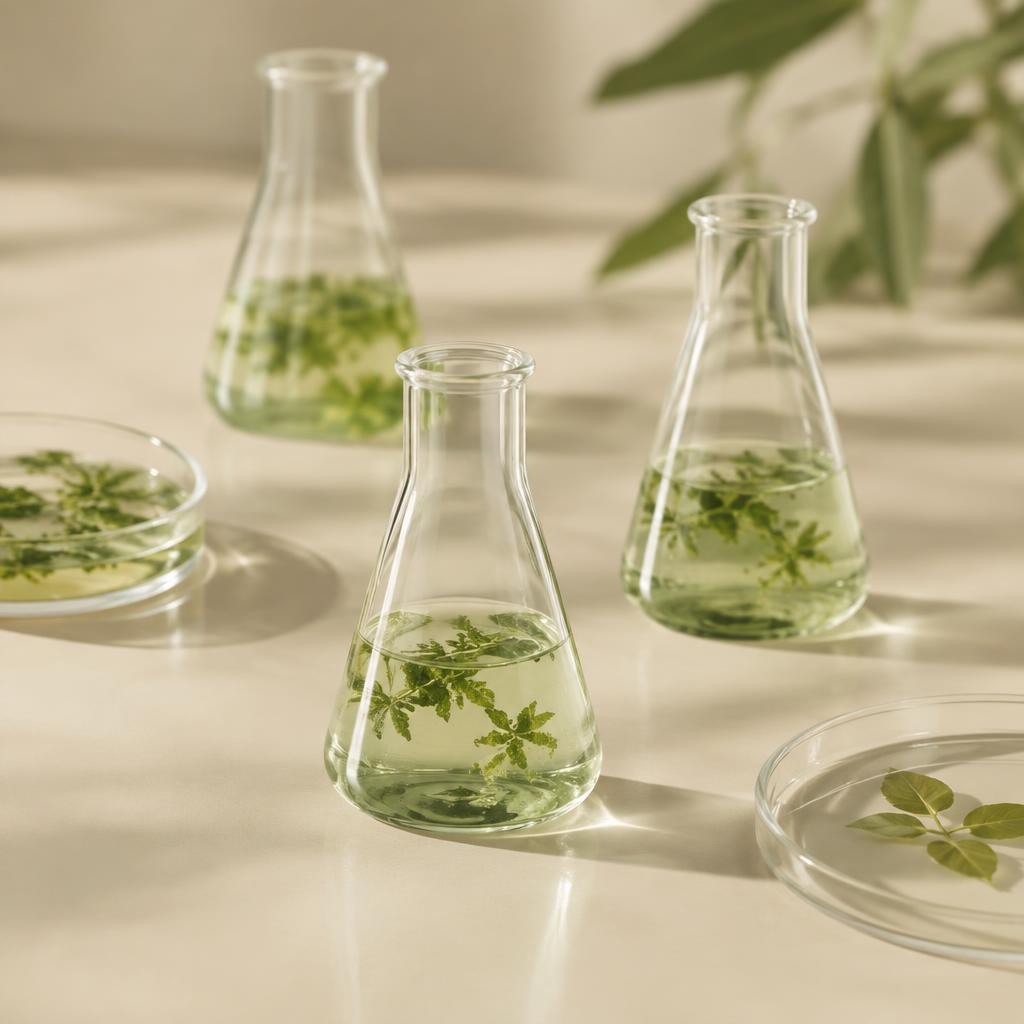
A small piece of plant tissue is used to establish a cell culture. Those cells are nurtured with the nutrients and conditions they need to grow. As the culture develops, the conditions can be fine-tuned to encourage the production of compounds useful in skincare.
Once established, a culture can be maintained and expanded. Instead of growing and harvesting whole crops for every production cycle, the process grows the cells needed for the active ingredient.
- 01Select a plant and take a small tissue sample
- 02Establish and grow its cells in controlled conditions
- 03Obtain actives for carefully developed skincare formulas
02 · Every drop counts
Water is precious.
The way we grow matters.
Conventional plant extraction carries the water demands of growing the crop as well as processing it. By cultivating plant cells rather than whole fields, biotechnology can reduce this demand for selected botanical actives.
The ingredient technology’s 2024 sustainability report estimates substantial water savings across its production — an average of 99% compared with traditional plant extraction systems for cosmetics.
99%
average water savings vs. conventional plant extraction*
64,000
tonnes of water saved in 2024*
200,000
tonnes saved over four years*
*Reported estimates for the ingredient technology provider’s overall production, not Trademark Skin’s products or operations. The 99% figure is an average across that production, compared with traditional plant extraction. Source: 2024 ingredient-production sustainability report, Water Project, p. 13. Savings vary by ingredient and production method.
03 · Biodiversity, considered
Keep the wonder.
Rethink the harvest.
Botanical diversity is a source of extraordinary cosmetic ingredients. Cell cultivation can reduce pressure to repeatedly harvest plants for their actives — especially valuable when a species is slow-growing or difficult to cultivate. Responsible sample sourcing still matters; biotechnology is an opportunity to reduce pressure, not a licence to ignore it.
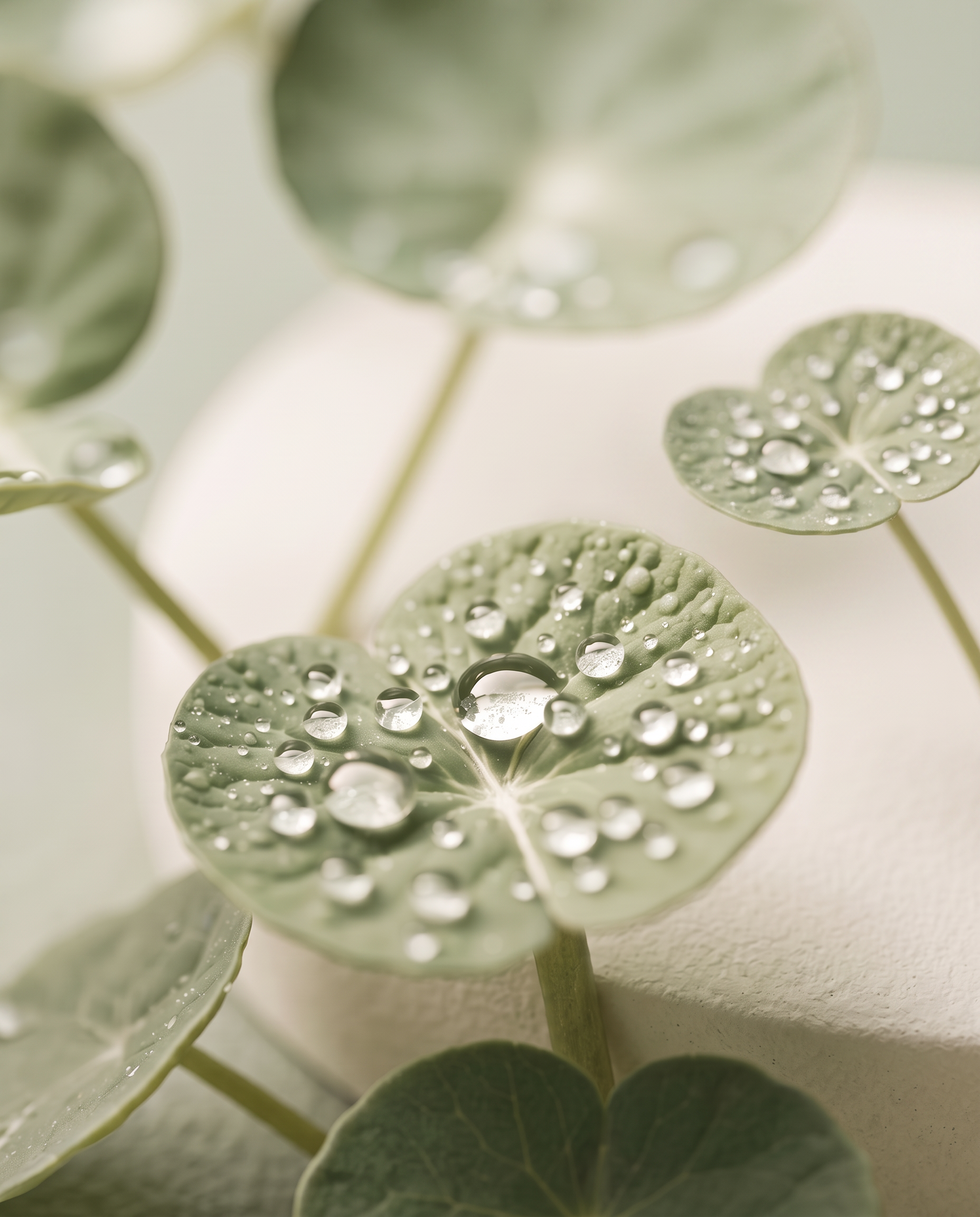
Centella
From a delicate leaf to cell-derived actives selected for skin-focused formulations.

Baobab
A remarkable botanical whose cell technology explores a different route to cosmetic actives.

Sarcocapnos
A reminder that even lesser-known plants can inspire new possibilities in botanical science.
04 · Better science, thoughtful skincare
Nature-led.
Precision-grown.
Controlled cultivation helps manage the variables that affect an ingredient: temperature, nutrients, light and the culture’s growth conditions. It also reduces dependence on changing seasons and field conditions.
For skincare, that means a more controlled route to producing selected actives. Each technology is chosen for its own cosmetic purpose — from hydration and barrier support to smoother, firmer-looking skin. Environmental advantages and skin benefits are separate questions, and both deserve evidence.
Selected Trademark HIM and HER formulas bring these plant cell-derived ingredients into your daily ritual. The benefits depend on the specific active, its concentration and the finished formulation — not simply the words “plant stem cells”.
Your questions, answered
Are plant stem cell ingredients still botanical?
Yes. The starting material comes from a plant. Biotechnology cultivates its cells in a controlled environment, then processes the culture to obtain cosmetic actives. It is a different way of producing botanical ingredients, rather than repeatedly harvesting large quantities of plant material.
Are living stem cells going into my skin?
No. Cosmetic plant cell actives are processed ingredients derived from cultured plant cells. They do not become human skin cells. Their value lies in the compounds they contain and the specific cosmetic benefits supported by ingredient testing.
Does cultivation use no water or energy?
It still needs water, nutrients, equipment and energy. Its environmental advantage is the potential to use fewer resources than conventional extraction for comparable actives. The impact depends on the ingredient and how it is made; biotechnology does not mean zero impact.
Does this help protect wild plant populations?
It can. When an active is cultivated from a small tissue sample rather than gathered from the field, demand no longer depends on repeatedly harvesting whole plants. That eases pressure on slow-growing and at-risk species, and supports biodiversity — though the benefit still depends on how responsibly each ingredient is sourced and made.
Do the water figures measure my bottle’s footprint?
No. They are reported estimates for the ingredient technology provider’s overall production compared with traditional plant extraction. They are not a life-cycle assessment of a Trademark product, and do not include our packaging, shipping or finished-product manufacture.
Discover the science in your ritual
Pure for your skin. Better for the planet.
Explore the technologies behind selected Trademark formulas, then find the skincare that suits your system.