
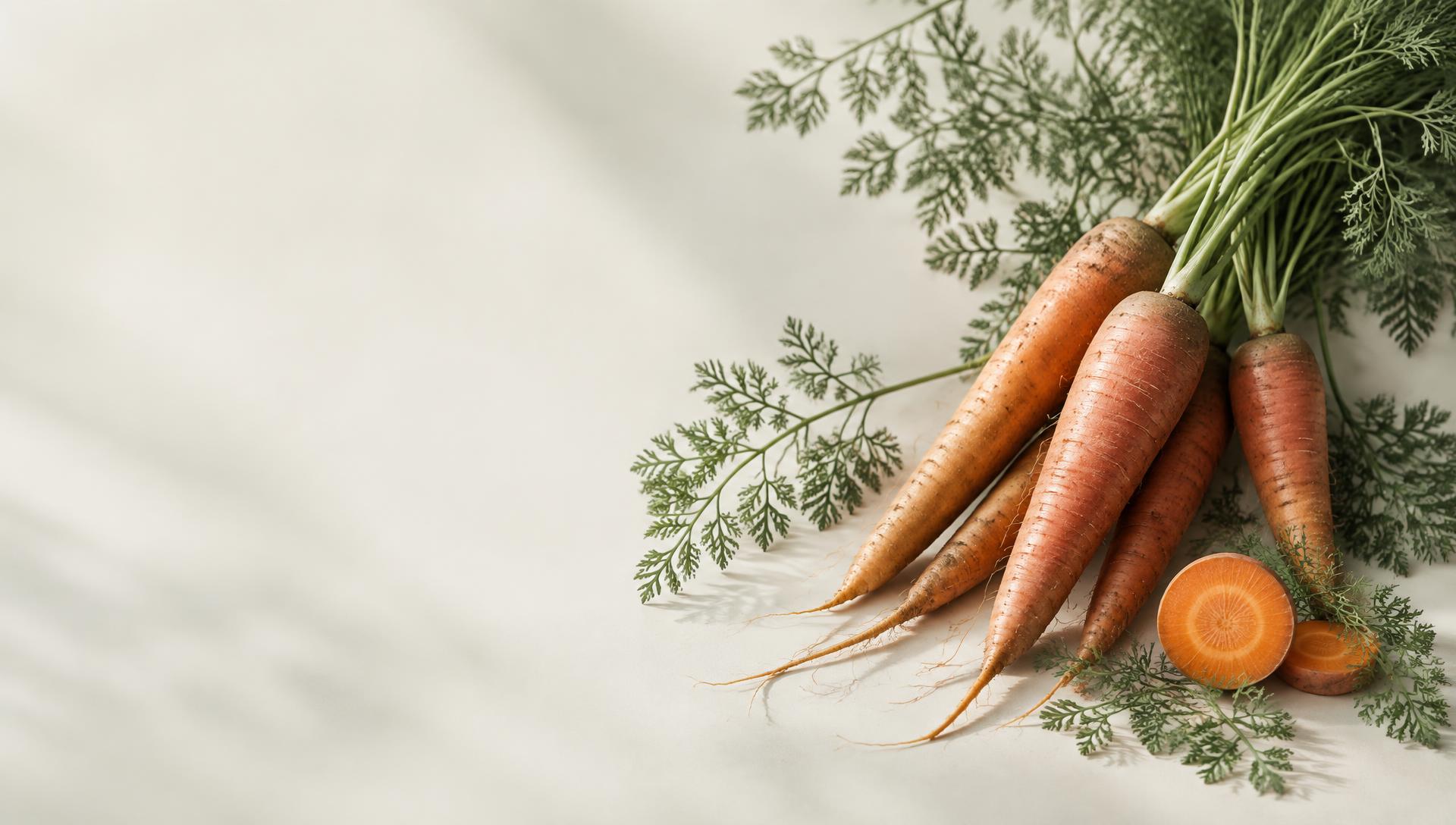
The Stem Cell Library — No. 08
Carrot. Cellular comfort.
A softer approach to sensitive skin. Carrot plant cell science brings together barrier-supporting lipids, calming compounds and plant-derived PDRN.
Less reactivity. More comfort. A supported moisture barrier.
−32%
Less moisture escaping
Water-loss measurement · 24 hours after an irritation patch was removed
−19%
Reduced measured redness
Redness measurement · 24 hours after patch removal
67%
Reported a feeling of comfort
Volunteer self-assessment · ingredient research
Ingredient-level research · 15 volunteers aged 18–60 with sensitive skin · a research formula containing the Carrot active. Water-loss and redness changes are relative to readings just after patch removal, not placebo-adjusted differences. Comfort is a separate self-assessment; individual results vary.
The plant behind the science
A familiar root. An unexpected depth.
Daucus carota sativa is better known as Carrot. Beneath its everyday appearance is a plant with protective fatty acids, polyphenols and a remarkable capacity to adapt.
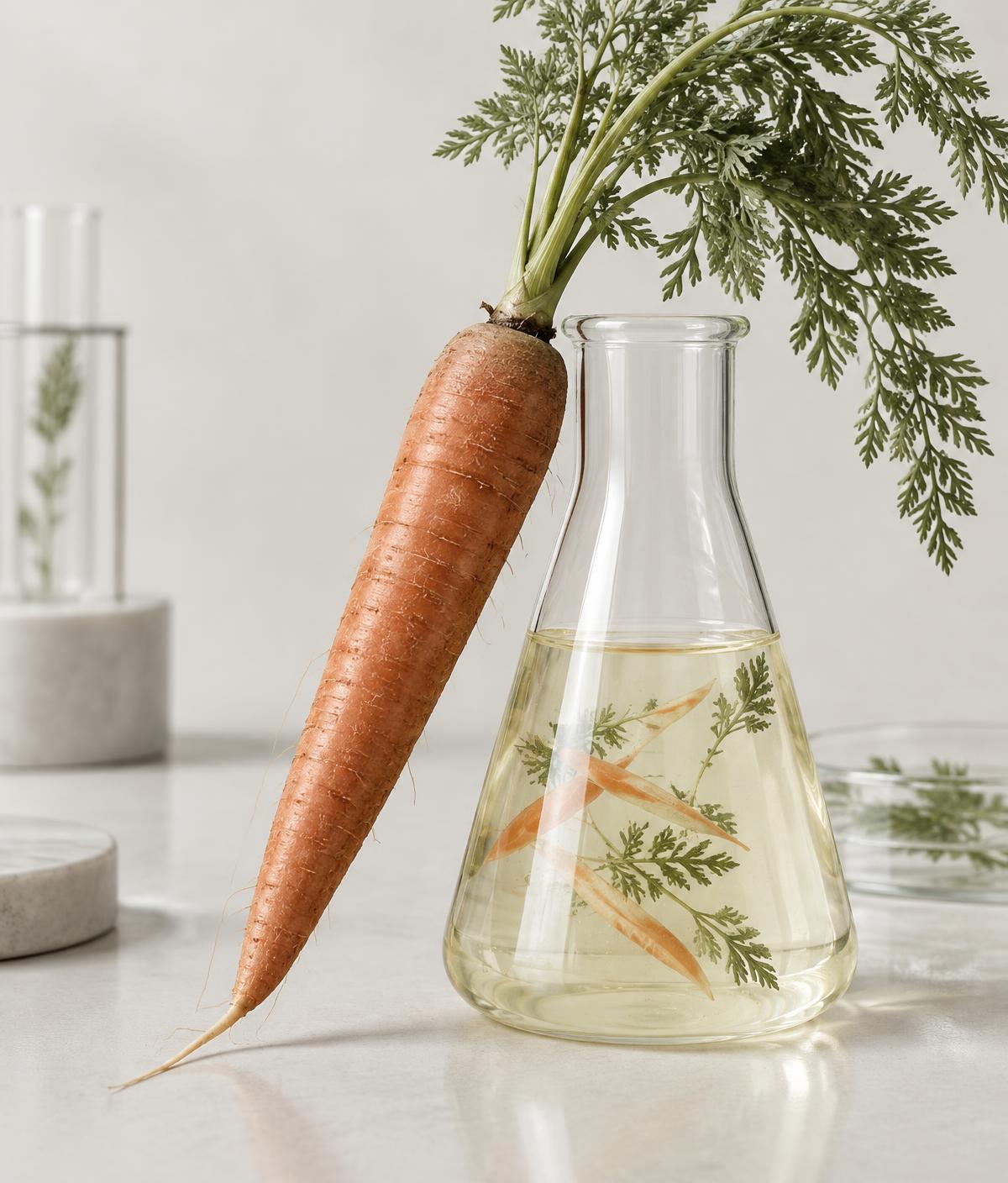
In this biotechnology, Carrot cells are cultivated under controlled conditions. Light and culture conditions help shape the resulting blend of barrier-supporting lipids and antioxidant compounds — going beyond a simple root extract.
The aim is not just to soften skin’s surface, but to support the protective environment that helps skin feel comfortable.
The science, made simple
Comfort starts with more than soothing.
Support the barrier
Omega-3 and omega-6 fatty acids help replenish the protective lipids in skin’s outer layer. Think of them as support for the seal that keeps moisture in.
Quiet the stress signals
Cell experiments found changes in signals linked to sensitivity: less of a stress messenger called CGRP, and more beta-endorphin, a messenger associated with comfort.
Respect the microbiome
Skin’s natural bacteria are part of its protective ecosystem. Laboratory testing explored microbiome compatibility and how the active influences bacteria’s response to stress signals.
These mechanisms were explored in laboratory models. They help explain the ingredient’s design, rather than predict a particular result for every person.
PDRN
Polydeoxyribonucleotide · short DNA fragments
Small DNA fragments. A new botanical possibility.
PDRN stands for polydeoxyribonucleotide — simply, short pieces of DNA. In the supplied research, these fragments were identified in cultivated Carrot cells, offering a plant-based source rather than a fish-derived one.
Scientists studied the isolated Carrot PDRN in human dermal fibroblasts: cells involved in maintaining skin’s supporting structure. The findings open an ingredient-level conversation about skin-cell activity and recovery.
164.9 ng/mL
Plant PDRN identified in Carrot culture
Measured in the studied Carrot cell lysate — the material released from opened cells. This is a research-sample measurement, not an amount used in the skincare formula.
Carrot PDRN
+23%
Skin-cell proliferation in the lab
The source reports the strongest response for isolated Carrot PDRN versus the negative control in a nutrient-deprived fibroblast model. Proliferation means cells multiplying; it is not a percentage improvement in skin appearance.
Clinical ingredient research
What calmer skin looked like in the study.
Researchers used an irritation patch to challenge the skin barrier, then measured redness and how much water escaped through the skin. A placebo was tested alongside the Carrot active.
| At 24 hours | Placebo | Carrot active |
|---|---|---|
| Water loss through skin | −14% | −32% |
| Measured redness | −6% | −19% |
15 volunteers aged 18–60 · sensitive skin confirmed by a stinging test · 1% SLS irritation patch for 24 hours · readings after patch removal. The newer PDRN presentation describes one application after removal. The earlier Carrot presentation also describes 21-day twice-daily forearm use. The figures above are changes from the post-patch reading, not percentages of users.
73%
Reported a calming effect.
60%
Reported less feeling of sensitivity.
Separate volunteer self-assessment reported in the Carrot ingredient presentation.
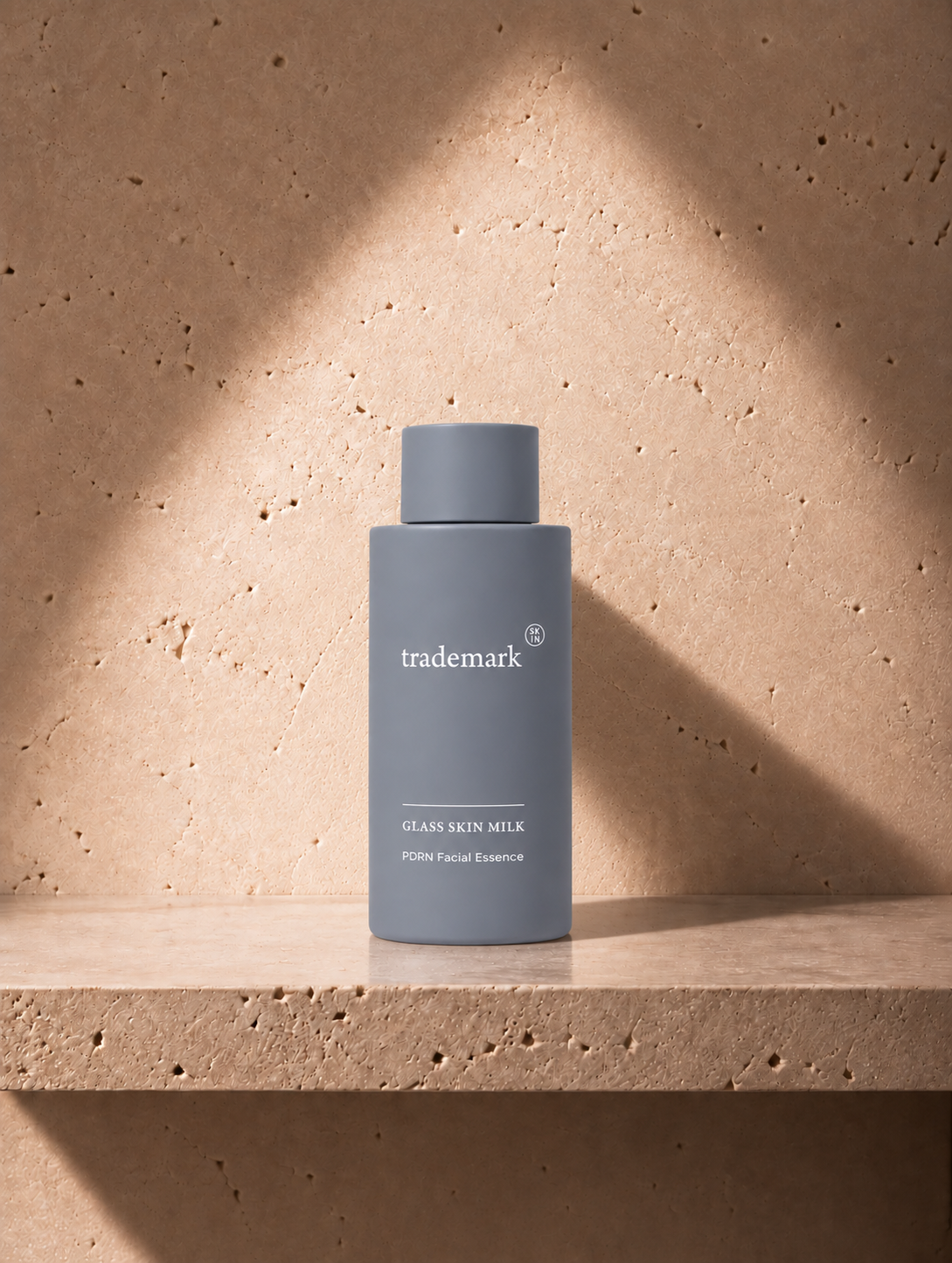
Find it in Trademark HER
Glass Skin Milk. Comfort, before everything.
Our milky PDRN facial essence pairs Carrot plant cell biotechnology with Grapevine stem cells and hydrating ingredients to support a softer, dewier-looking complexion.
Press into freshly cleansed skin before serum and moisturiser — a lightweight first layer for hydration, radiance and moisture-barrier support.
Discover Glass Skin MilkA little more clarity
Your Carrot questions.
What does cellular comfort mean?
It describes the aim of helping reactive skin feel calmer while supporting its moisture barrier. Carrot ingredient research examined skin-cell stress signals, water loss, redness and volunteers’ feelings of comfort. It is skincare research, not a treatment for a medical skin condition.
Is this the same as carrot juice or carrot oil?
No. The active comes from cultivated Carrot plant cells, grown in controlled conditions to produce a blend of fatty acids, antioxidant compounds and plant-derived molecules. It is different from juice or oil, and the supplied studies do not establish a direct potency comparison with conventional carrot extracts.
What is plant PDRN in everyday language?
PDRN is a collection of small DNA fragments. Here, those fragments come from cultivated plant cells rather than fish. Researchers are studying how they support skin-cell activity and repair-related pathways. The plant cells do not become living cells in your skin or change your DNA.
Does Carrot PDRN come inside exosomes?
The supplied research identified PDRN in the material released from broken-open Carrot cells, called a cell lysate. Its evidence for PDRN inside exosomes comes from a separate Centella culture. We keep those findings distinct rather than applying the Centella discovery to Carrot.
Is plant PDRN better than salmon PDRN?
Plant sourcing offers an animal-free alternative. The Carrot research showed activity in human skin-cell laboratory models, but it does not demonstrate that Carrot PDRN outperforms salmon PDRN on people’s skin. Topical skincare and injectable procedures are also different uses and should not be treated as interchangeable.
How should I use Glass Skin Milk?
After cleansing, press into the face and neck until absorbed, before your serum or moisturiser, morning and night. Follow the product directions and avoid contact with eyes. Introduce new skincare gradually; if irritation persists, stop using it and seek professional advice.
Evidence: supplied Carrot ingredient technical and efficacy presentation, v24.03, and PDRN in plant cell cultures research presentation. Clinical results on skin, volunteer opinions and isolated-PDRN cell experiments are different evidence types. Carrot PDRN findings concern the cell lysate; exosome-contained PDRN findings in the supplied research concern Centella. Botanical and laboratory imagery is illustrative.