
The Stem Cell Library — No. 09
Goji Berry. Plant Exosomes.
Tiny botanical messengers. A new way to explore skin that looks smoother, firmer and more supported.
Plant cell science. Barrier support. Cellular communication.
11%
Less wrinkle depth versus placebo
Crow’s-feet measurement · 56 days · 23 women
+6%
Measured skin density
Forearm ultrasound · versus baseline · 28 days · 23 women
−6%
Measured area beneath the jawline
Facial-contour image analysis · versus baseline · 28 days · 67 women
Ingredient-level studies · the Goji active · used twice daily. Wrinkle results are reported versus placebo; density and contour results are versus baseline. These are different measurements, not percentages of users or guaranteed results.
The plant behind the science
More than a superfruit.
A source of tiny messengers.
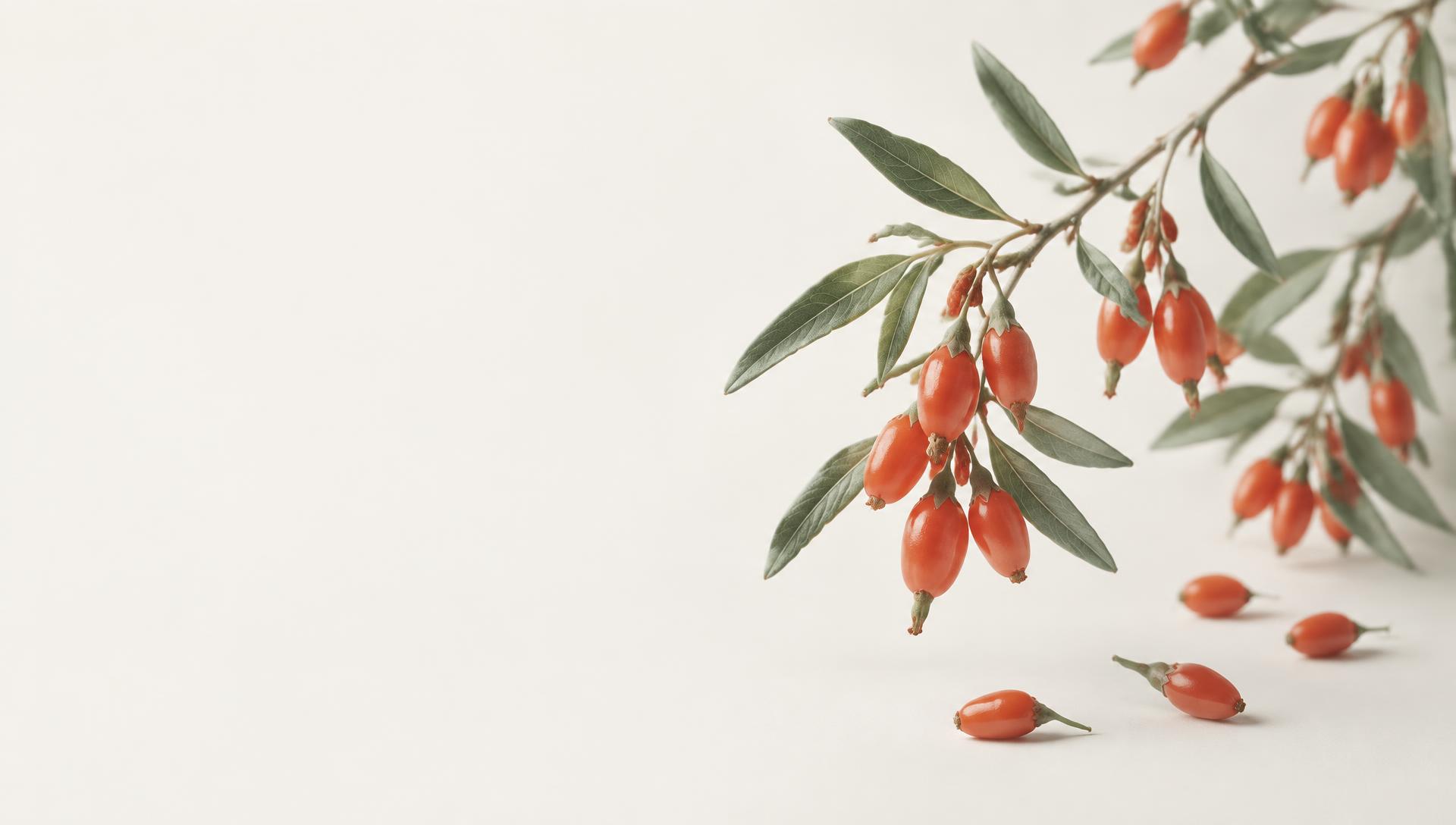
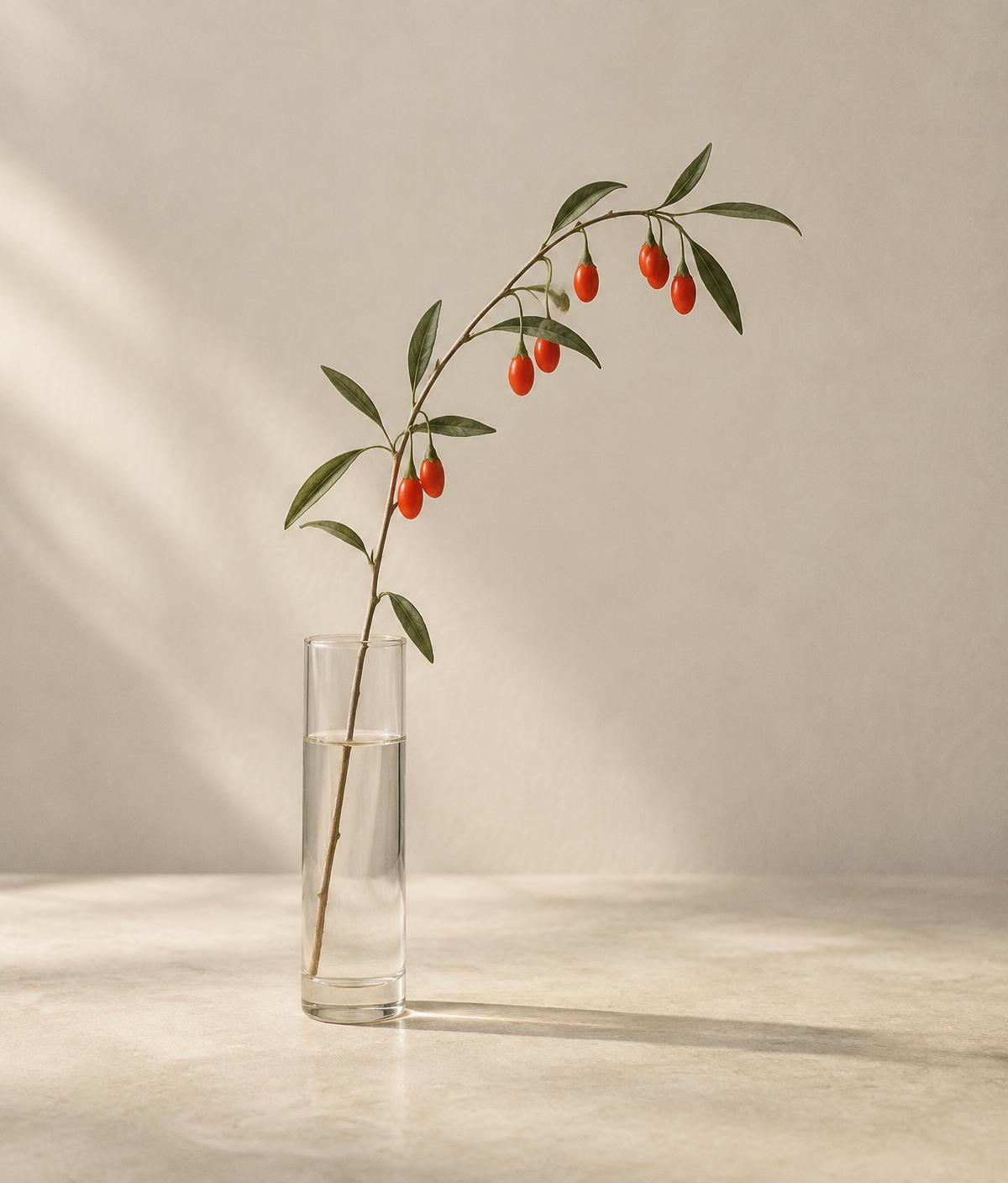
Lycium barbarum, the Goji plant, is known for its bright red-orange berries. The biotechnology begins with a seedling, rather than a bowl of crushed fruit.
A small plant sample forms a renewable cell culture, grown in controlled conditions. Researchers identified naturally occurring exosome-like particles in this culture and confirmed their membrane structure using electron microscopy.
Around 200 nanometres in the studied samples — far smaller than you can see. Small enough to carry molecular information, without being living cells.
The science, made simple
Two sides of
the same conversation.
01
Botanical messengers
The studied Goji cell culture naturally contains tiny membrane-wrapped particles, often called plant exosomes. They carry plant molecules such as lipids, proteins and RNA.
02
Barrier support
In skin-cell experiments, the Goji active increased the activity of genes involved in forming the outer protective barrier — the layer that helps keep moisture in.
03
Cell-to-cell conversation
Separate laboratory tests found increased exosome release from human mesenchymal stem cells. Their collected culture medium then increased collagen- and elastin-related gene activity in fibroblasts.
Laboratory mechanism studies. The transferred culture medium contained soluble factors as well as exosomes, so these findings do not isolate exosomes as the only cause. Gene-expression changes are not a direct measurement of new collagen or elastin in people.
Why the messages matter
Skin has its own
communication network.
Skin cells do not work alone. They exchange signals that help coordinate the protective barrier and the supporting structure beneath it.
The Goji research asks whether a botanical active can support that conversation. It connects outer-barrier research with laboratory signals associated with collagen and elastin — the proteins behind skin’s strength and spring.
Outside
Plant-derived parcels
The active naturally contains Goji vesicles. Skin-cell experiments explored activity of genes important for barrier formation.
Within
The skin cells’ own messages
Human cell-culture experiments found increased exosome-release measurements after exposure to the Goji active. This is a laboratory finding, not proof of how far an applied skincare formula travels through skin.
Clinical ingredient research · 28–56 days
Smoother lines.
A more supported appearance.
Three separate measurements explored the cosmetic effects of a research formula containing the Goji active. Here is what was measured — and what each result actually means.
| What was measured | Reported finding | Study conditions |
|---|---|---|
| Crow’s-feet wrinkle depth | 11% less depth versus placebo | 23 women aged 41–69 · split-face study · 56 days |
| Skin density by ultrasound | +6% versus baseline | 23 women aged 41–69 · paired forearms · 28 days |
| Area beneath the jawline | −6% versus baseline | 67 women aged 39–70 · active and placebo groups · 28 days |
All studies used the Goji active, used twice daily on skin. The density study measured epidermis and dermis, not collagen quantity alone. The contour study measured a defined triangle below the jawline: a smaller measured area is not an equivalent percentage of “face lifting.” The older 2019 article reports density as 5.9%; the later brochure rounds it to 6%.
Beyond facial skin
Body skin deserves
the same attention.
A separate placebo-controlled study explored the Goji active in the bust area. It measured skin elasticity and anatomical distances, alongside an investigator’s assessment of sagging.
44
Women aged 18–44
56 days
Twice-daily use
Placebo-controlled
Study design
Ingredient-level body study. Reported changes relate to the specific elasticity, distance and assessment measures; they do not establish an increase in breast size or an alternative to a surgical procedure.
Find it in Trademark HER
Botanical science.
Your daily ritual.
Explore selected HER formulas featuring Goji plant cell technology. Follow each product’s directions for your face or body routine.
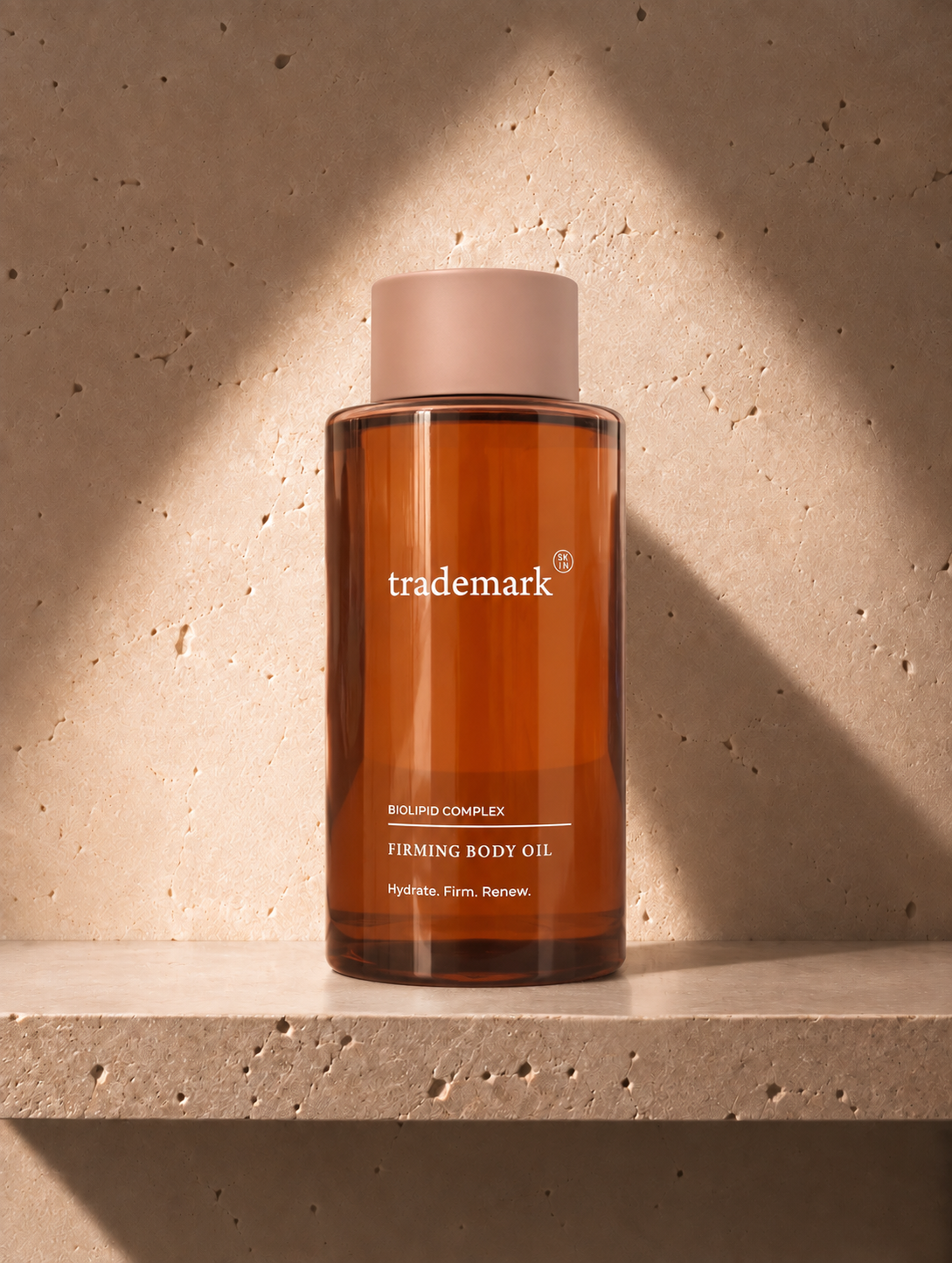
Biolipid Complex Firming Body Oil
Discover the formulaA little more clarity
Your Goji Berry questions.
What are plant exosomes, in plain language?
They are tiny, membrane-wrapped parcels released by plant cells, carrying molecules that can take part in cell-to-cell communication. The more precise term for the plant particles is exosome-like extracellular vesicles. They are not living stem cells.
Is this just Goji Berry juice or fruit extract?
No. The researched active comes from a cultivated cell line started from a Goji seedling. It naturally contains plant exosome-like particles. A conventional Goji fruit extract is a different ingredient and should not automatically be credited with these exosome-study results.
What does dual exosome activity mean?
The research explores two ideas: supplying plant-derived vesicles and encouraging human cells to release more of their own exosomes in laboratory conditions. Those are different mechanisms. Dual activity does not mean the number of exosomes in your skin doubles.
Does this rebuild collagen or lift my face?
The laboratory research measured collagen- and elastin-related gene activity, while clinical studies on skin measured wrinkles, density and facial contours. Gene activity is not the same as measuring new collagen in a person’s skin. The facial result was a change in an image-analysis area beneath the jawline, not a surgical lift or a change in facial bone structure.
How long was the Goji active studied?
The supplied research studied the Goji active. Wrinkle depth was assessed after 56 days; skin density and facial contours after 28 days. It was used twice daily. The studies involved different groups and body areas, so the results should not be combined into a single promise. Individual results vary.
Are exosomes and PDRN the same thing?
No. Exosomes are membrane-wrapped particles; PDRN is a collection of small DNA fragments. They are different concepts, even when both appear in plant biotechnology research. These Goji documents do not establish PDRN content in this active. Explore the Carrot and Centella pages for the separate plant-PDRN evidence.
Evidence: supplied Goji exosome ingredient brochure, version 1.3; “Dual exosome power for skin rejuvenation,” Personal Care, January 2025; and “Stem cell activation for a V-shaped face,” Personal Care, April 2019. These are ingredient-supplier research reports. Laboratory mechanisms and clinical measurements on skin are distinct evidence types. Botanical and laboratory imagery is illustrative.